Концепты от ChatGPT: имя и лицо канала, десять эпизодов, обложки, шортсы и карусели
ChatGPT получил наш бриф (факты, оффер, правила) и сделал концепты; картинки нарисовал сам. Мы проверили факты и пометили, что берём. Главное предложение ChatGPT: канал «Ask an MS Doctor» с платформой «вопросы, с которыми уходишь с приёма». Врачи на обложках сгенерированы, это только образец композиции: в финале кадры настоящих врачей.


IdentityИмя и вид канала: два направления, решение за Романом
ChatGPT советует B: мятный, продолжение графики английских эпизодов. Я за A: оранжевая лента в США узнаётся как символ РС, совпадает с цветом RYA и сильнее на маленьком аватаре. Решение D16 на странице Plan.
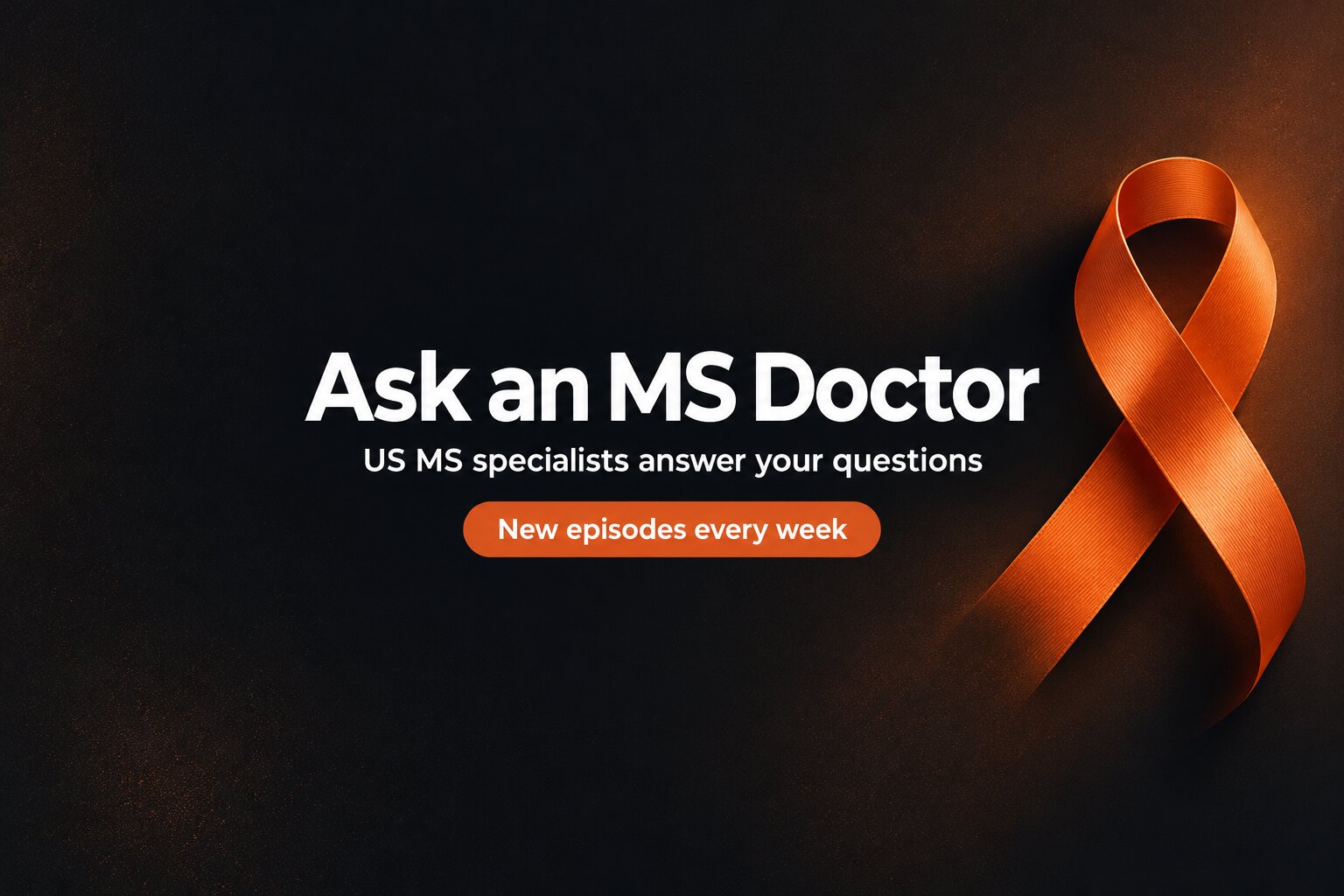
Three name options
| Name | Handle idea | One-line promise |
|---|---|---|
| Ask an MS Doctor | @AskAnMSDoctor | Bring your MS questions. Hear a specialist explain what matters. |
| MS Specialists Answer | @MSSpecialistsAnswer | US MS specialists answer the questions patients ask between appointments. |
| MS Questions, Clear Answers | @MSQuestionsClearAnswers | Understand your next MS conversation with clear explanations from specialists. |
Direction A: Orange ribbon and deep ink
- Palette: Awareness orange
#F47721, deep navy#101C2D, ink#090F18, warm white#FFF8F0, muted slate#657386. - Typography: Source Sans 3 Semibold for headlines; Source Sans 3 Regular for explanations and captions. Use sentence case and open spacing.
- Avatar: An original orange MS-awareness ribbon on deep navy. Keep its silhouette clear at small size. Place the channel name outside the circle in other applications. Avoid borrowing an organization's ribbon mark.
- Banner: A calm portrait strip of confirmed specialists with “Ask an MS Doctor” and “US specialists. Patient questions.” Keep essential wording in the central crop-safe area. Add a ribbon detail and a small “Produced by RYA.AE” credit.
- Thumbnail rules: Doctor portrait on one side, patient question fragment on the other. Warm white text on navy; orange highlights the key concern. Consistent face crops and text alignment. Four words or fewer. Use a diagram only when it explains the central question. Avoid alarmed expressions, danger symbols, and fabricated MRI findings.
- Example: “Does This Mean MS?” beside a thoughtful doctor and a clearly labeled illustrative scan.
Direction B: Mint and black
- Palette: Signature mint
#2EDA9D, black#080A09, off-white#F4F8F6, pale mint#D9F7EC, graphite#39423E. - Typography: Inter Semibold for headlines; Inter Regular for captions, chapter cards, and explainers. Spell out clinical terms before using abbreviations.
- Avatar: Off-white “MS” inside a mint speech-bubble outline on black. The speech bubble connects the identity to patient questions.
- Banner: “Your MS questions, explained.” with a mint question-card motif and a confirmed specialist portrait. Keep the channel name visible in the central crop-safe area.
- Thumbnail rules: Off-white question text on black, with black type on a mint highlight for the key word. Natural portrait lighting. Four words or fewer. One explanatory device per thumbnail: a question card, diagram, or process step. Avoid essential mint text on white. Keep the lower-right corner clear for YouTube's duration display.
- Example: “Relapse Or Heat?” with a neutral doctor portrait and a simple thermometer illustration.
TrailerТрейлер канала на 55 секунд: вопрос после приёма
Снимаем фрагменты в поездке: тишина кабинета, врач слушает и отвечает, карточки вопросов. Монтаж после первых съёмок.
| Planned time | Picture and beat | Voiceover |
|---|---|---|
| 0:00-0:08 | Quiet office. Cards: “Is it really MS?” “Which treatment?” “What happens next?” | “An MS appointment can leave you with questions you only find the words for later.” |
| 0:08-0:17 | A specialist listens, then addresses the camera. Reveal the channel name. | “Ask an MS Doctor brings those questions to US specialists, with clear explanations you can return to.” |
| 0:17-0:28 | Diagnosis, treatment, and daily-life chapter cards. Illustrative MRI and relapse graphics. | “What can an MRI tell you? How do you compare treatments? What should you ask when symptoms change?” |
| 0:28-0:39 | Approved specialist excerpts, readable captions, and an explainer. | “Each episode starts with a patient question and gives the doctor room to explain the evidence, the uncertainty, and the next conversation.” |
| 0:39-0:48 | Disclosure card, then return to a doctor portrait. | “Produced by RYA.AE. Privately sponsored, with no pharma or device funding. Every doctor approves their cut.” |
| 0:48-0:55 | Channel lockup. “Subscribe.” Small footer: “Education, not personal medical advice.” | “For your next appointment, and the questions between appointments. Subscribe to Ask an MS Doctor.” |
EpisodesДесять эпизодов под темы врачей из списка
Это пары «тема и врач», а не обещание снять десять разных людей: несколько тем могут быть вариантами для одного врача. Заголовки в форме вопроса пациента, обложки по правилам направления.
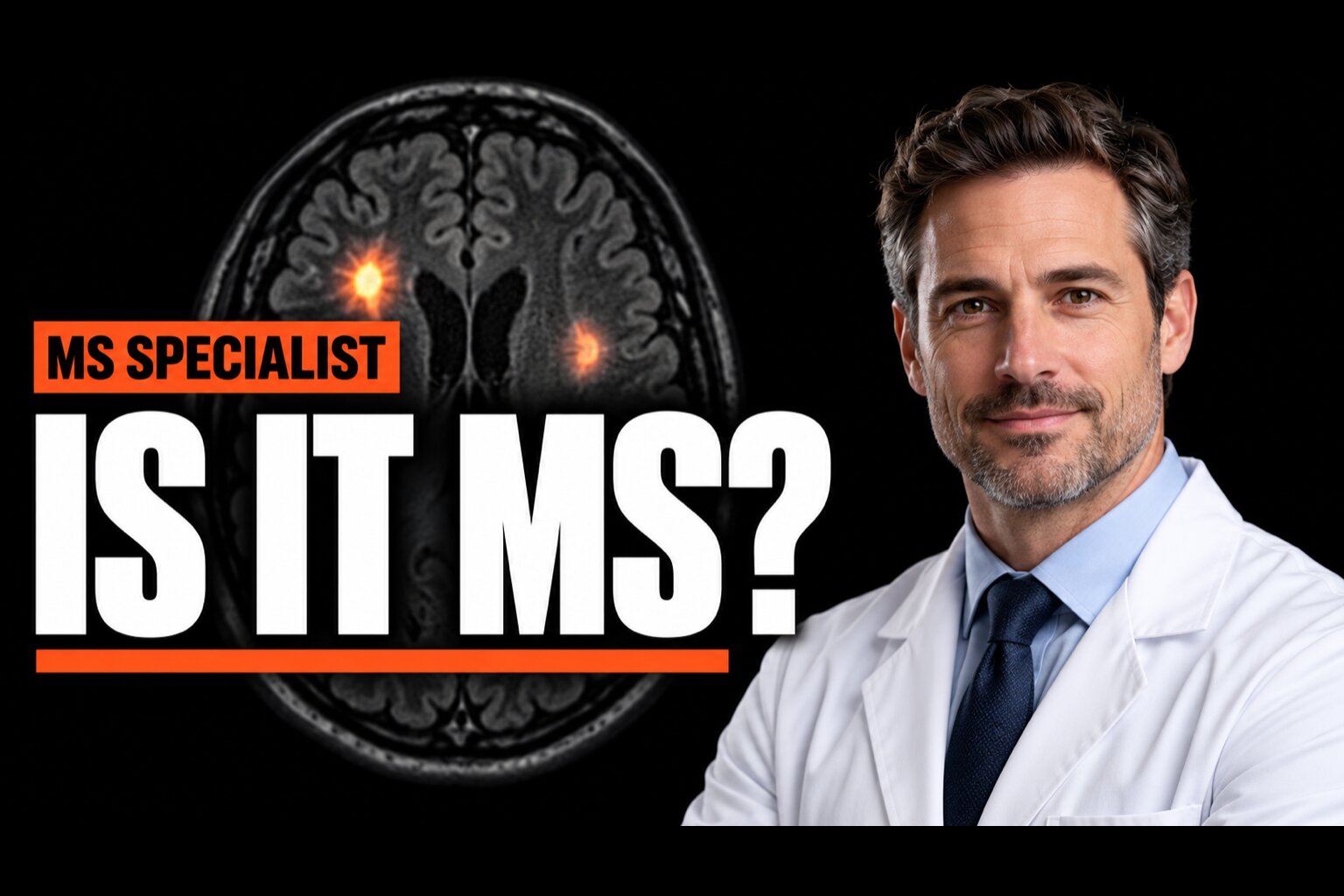
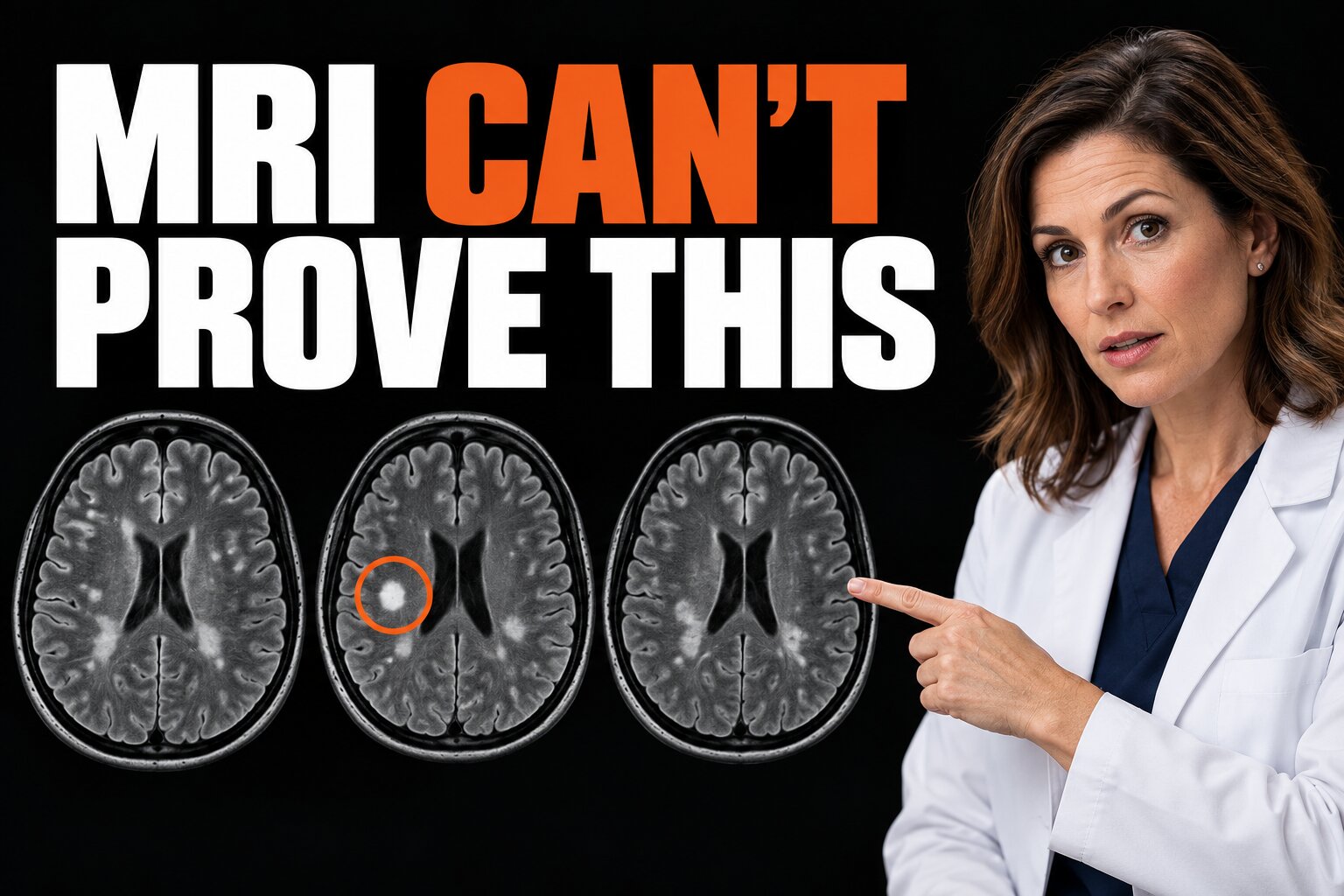
1. MS misdiagnosis and the limits of MRI
- What does an MRI show, and what can it leave uncertain?
- Can other conditions cause findings that resemble MS?
- How do my symptoms and examination change the interpretation?
- When do spinal imaging or other tests help?
- What should I ask if my diagnosis still feels unclear?
- Which records should I bring for a diagnostic review?
- “Does a white spot on MRI automatically mean MS?” Pair the answer with a labeled illustrative scan.
- “Should I bring the MRI images or just the report?” End on the doctor's preparation advice.
2. Central vein sign
- What is the central vein sign in plain English?
- Why do specialists look for it when evaluating possible MS?
- Can my existing MRI show it?
- How does it fit with the other evidence in my case?
- What are its limits, including when it is not seen?
- When is it reasonable to ask my specialist about it?
- “Can you point out the central vein sign?” Use a doctor-reviewed illustration.
- “Do I need another MRI to look for it?” Preserve the doctor's qualifications in the cut.
3. MS in women and pregnancy
- What should I discuss before trying to become pregnant?
- How might my treatment plan affect the timing?
- What should I understand about MS during pregnancy?
- How should we plan for the period after delivery?
- How do breastfeeding preferences fit into treatment decisions?
- Who should coordinate care if pregnancy is unexpected?
- “Should I stop my MS medication if I want a baby?” Keep all treatment-change qualifications.
- “What belongs in a postpartum MS plan?” Use a simple checklist graphic.
4. MS in Latino communities, with bilingual production
- What misconceptions about MS do you encounter in Latino communities?
- How can someone describe symptoms when everyday language differs from medical terms?
- What can a patient do when language makes an appointment harder?
- How can family support decisions without speaking over the patient?
- How should someone raise concerns about access, cost, or trust?
- What should patients ask for before leaving an appointment?
- “Can I ask for an interpreter at my MS appointment?” Record matched English and Spanish answers.
- “How can my family help me prepare?” Create separate English and Spanish versions with matching graphics.
5. Choosing a disease-modifying therapy in 2026
- What is a disease-modifying therapy meant to do?
- Which details about my MS shape the options?
- How do we compare expected benefits and risks?
- How do pregnancy plans, infections, and other conditions affect the discussion?
- How do monitoring, insurance, and daily routines affect feasibility?
- How will we decide whether to continue or change treatment?
- “Is the strongest MS treatment always the right one?” Retain the individualized explanation.
- “What should I ask before starting a DMT?” Show questions rather than a product ranking.
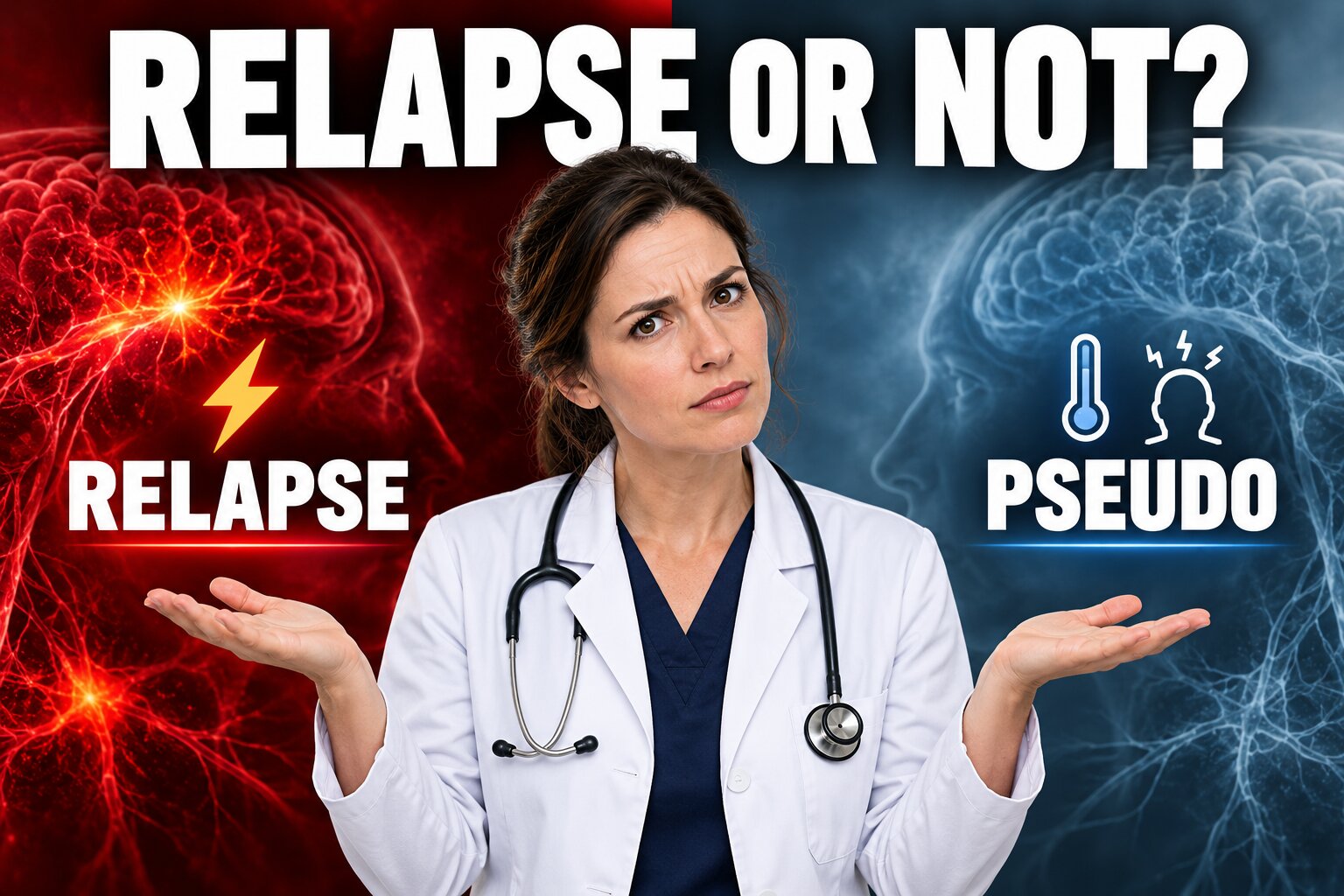
6. Relapse versus pseudo-relapse
- What do relapse and pseudo-relapse mean?
- How can heat, illness, or other factors complicate the picture?
- Which symptom details should I write down?
- How does the team decide whether I need an examination or tests?
- When should I seek urgent care instead of waiting for a callback?
- What should my personal symptom-response plan include?
- “Can heat bring an old MS symptom back?” Use the existing pseudo-relapse graphic style.
- “What should I tell the clinic when symptoms change?” End with doctor-approved reporting guidance.
7. Practical help for MS fatigue
- How do patients describe MS fatigue differently from ordinary tiredness?
- What other contributors should my team check?
- How can I track fatigue without making another exhausting task?
- How might pacing and suitable activity fit together?
- When should rehabilitation or medication enter the conversation?
- How can we tell whether a fatigue plan is helping me?
- “Why am I exhausted after sleeping?” Let the doctor explain what needs assessment.
- “Should I rest or move when fatigue hits?” Keep the answer conditional and practical.
8. Getting a second opinion
- Which unresolved questions make a second opinion useful?
- How can I raise the idea with my current neurologist?
- What records and images should I gather?
- What should I ask the reviewing specialist to clarify?
- What happens if the specialists disagree?
- How should I coordinate ongoing care while the review is pending?
- “Does asking for another opinion mean I distrust my doctor?” Use a direct-to-camera answer.
- “What should I bring to an MS second opinion?” Turn the answer into a preparation card.
9. The first week after diagnosis
- What should I leave the diagnosis appointment understanding?
- Which questions can I save for a follow-up conversation?
- What is the next discussion about treatment supposed to cover?
- What records and contact information should I keep together?
- How can someone I trust help without overwhelming me?
- What should I do if symptoms change before my next appointment?
- “Do I need to make every MS decision this week?” Preserve any urgency qualifications.
- “What question should I bring to my first follow-up?” Close on a readable question card.
10. Infusion day explained
- Which MS infusion are we discussing, and why do protocols differ?
- What screening and instructions should I receive beforehand?
- What happens when I arrive and before treatment begins?
- What will the team monitor, and what should I report immediately?
- What should I ask about the rest of the day and getting home?
- Whom should I contact if I have concerns afterward?
- “What should I bring to an MS infusion?” Use the selected clinic's approved instructions.
- “What should I tell the infusion nurse right away?” Keep the clinical context intact.
Shared compilation questions
- What's one MS symptom people ignore for too long?
- What should someone do in the first week after an MS diagnosis?
- What's the biggest myth about MS treatment today?
- When should a patient get a second opinion?
- What gives you hope in MS research right now?
ShortsШортсы: двенадцать вопросов и шесть «миф или факт»
Вопросы задаём каждому врачу в конце съёмки; это сырьё для YTMSEN и для Reels* клиник.
Twelve standalone patient-question hooks
- “Does a normal MRI rule out MS?”
- “Why does my MRI report say ‘nonspecific’?”
- “Should I ask about the central vein sign?”
- “Can I plan a pregnancy while taking MS treatment?”
- “Can I ask for an interpreter at my MS appointment?”
- “How will we know whether my MS treatment is working?”
- “Could a fever make my old MS symptoms return?”
- “Why am I exhausted even when I sleep?”
- “Can I ask for a second opinion without changing doctors?”
- “What should I write down after an MS diagnosis?”
- “What should I ask before my first infusion?”
- “What does my doctor mean by ‘stable MS’?”
Six “Myth or fact” lines for a neurologist
- “Myth or fact: White spots on an MRI always mean MS.”
- “Myth or fact: Every return of an old symptom is a new relapse.”
- “Myth or fact: If I feel well, my MS treatment is unnecessary.”
- “Myth or fact: Pregnancy is off the table after an MS diagnosis.”
- “Myth or fact: MS fatigue can always be fixed with more sleep.”
- “Myth or fact: All MS infusions follow the same routine.”
CarouselsКарусели LinkedIn: две готовы PDF, ещё две по концептам
Формат как у колоды Markets MRI: одна мысль на слайд, последний слайд с контактом.
PDF для LinkedIn (документ-пост): carousel_P2_case.pdf · carousel_P4_youtube_health.pdf. Тексты слайдов наши, проверены по данным; ChatGPT дал свои концепты ниже.
Carousel A: Our MS center case
| Slide | Headline | Supporting line |
|---|---|---|
| 1 | Patient questions. Specialist answers. | A Russian-language MS education case from RYA.AE. |
| 2 | Start with what patients ask | Symptoms, diagnostic uncertainty, treatment choices, and food were among the episode subjects. |
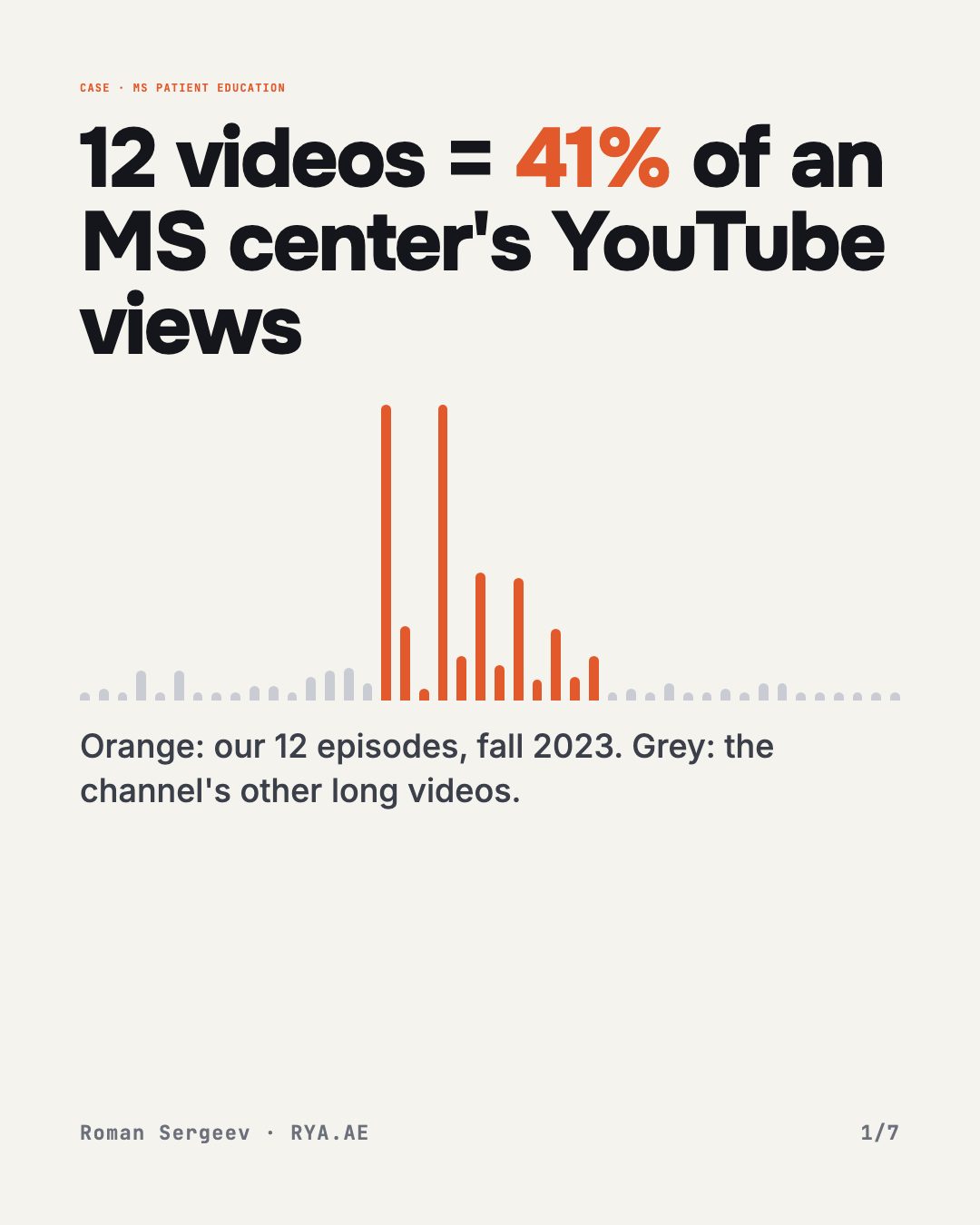
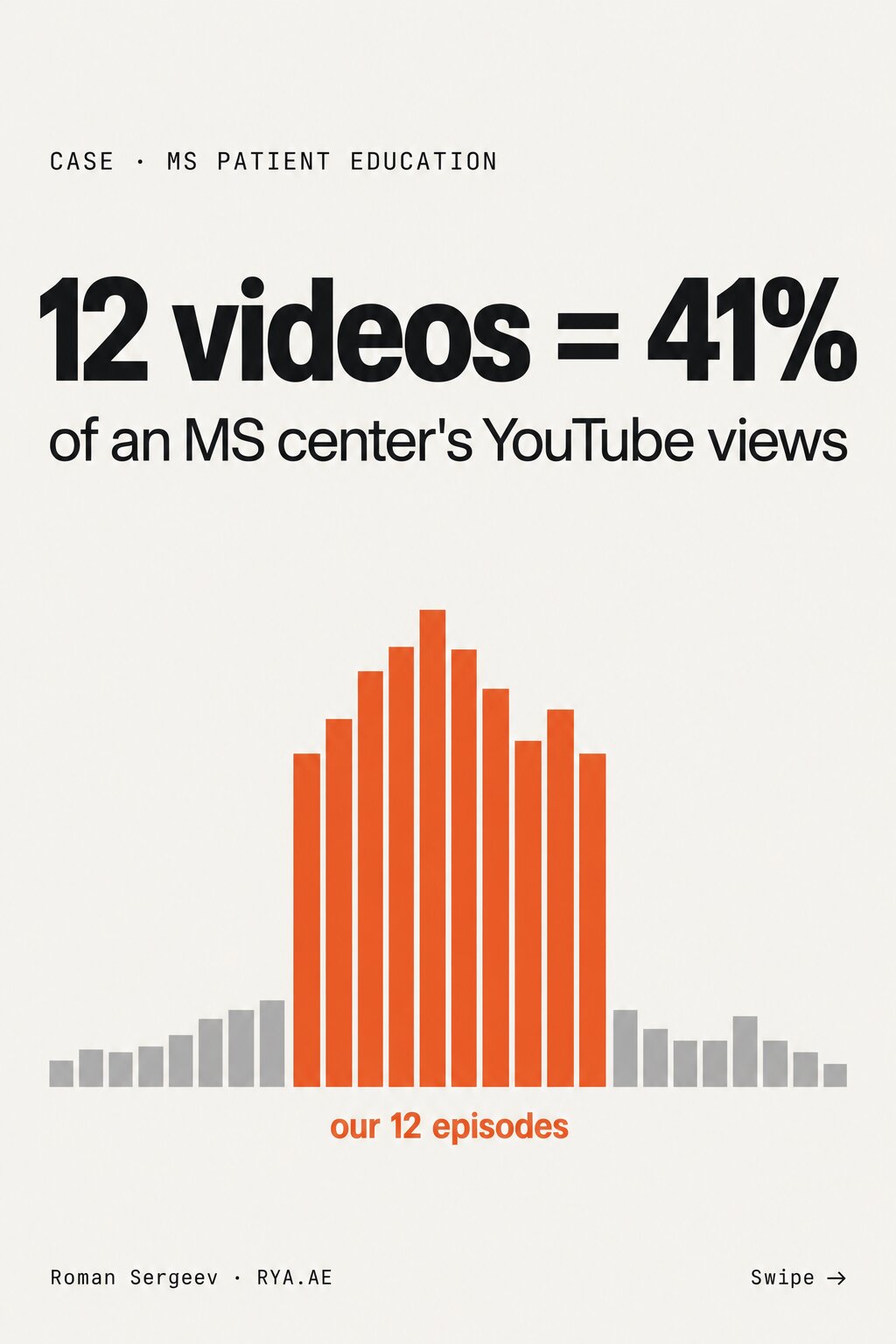
| 3 | 12 episodes. 258,238 views. | The series ran from Sep 2023 to Jan 2024. |
| 4 | 41% of lifetime channel views | The channel had 627,442 views across 113 videos in the supplied case data. |
| 5 | A higher median per episode | Series median: 12,862 views; earlier long videos: 2,734, a 4.7x difference. |
| 6 | More comments to learn from | The case comparison recorded 1,599 comments versus 111, a 14x difference; comments are not clinical outcomes. |
| 7 | Begin with your own channel | Message “AUDIT” for a free YouTube audit of your niche. |
Carousel B: YouTube Health label explained
| Slide | Headline | Supporting line |
|---|---|---|
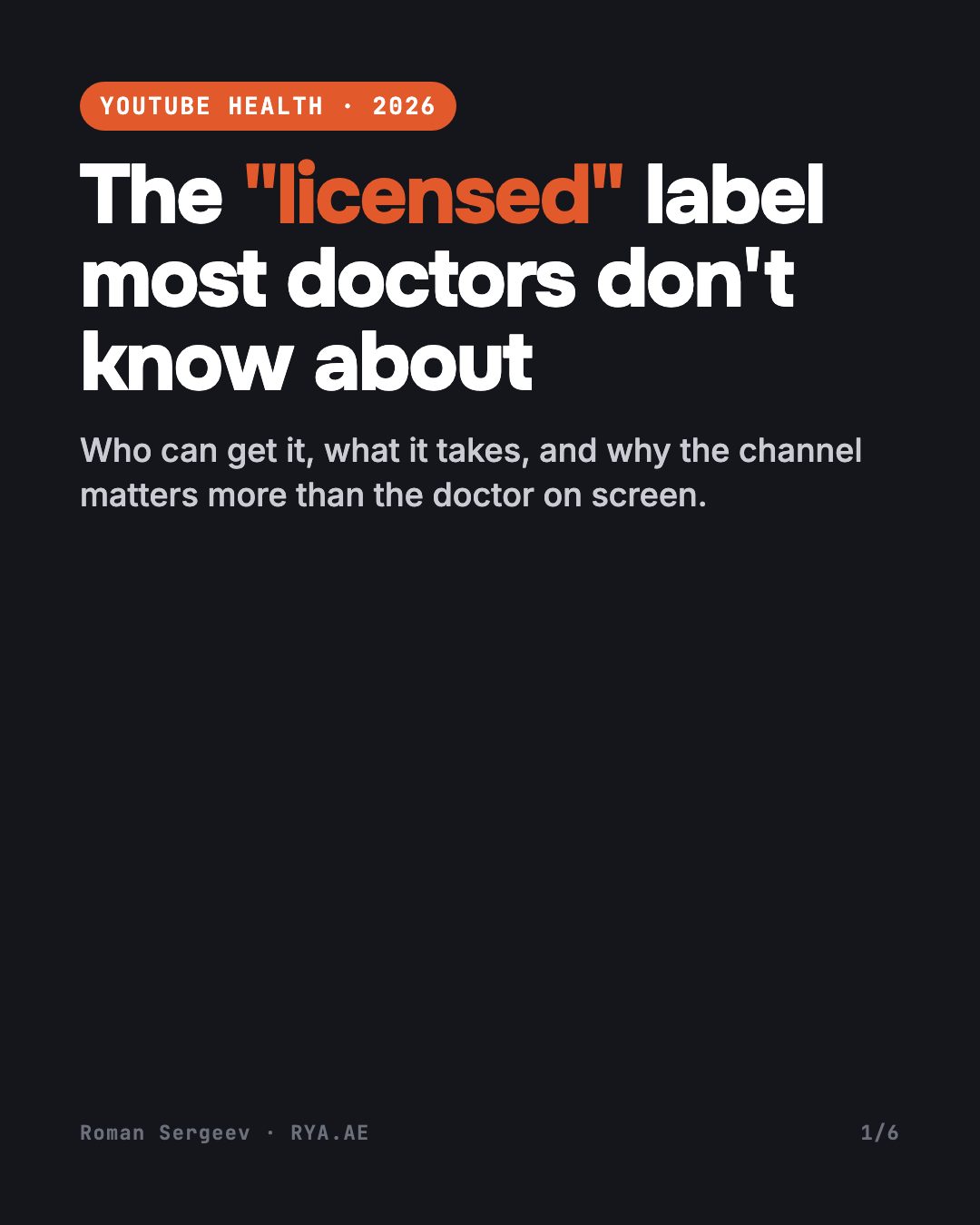
| 1 | What does the Health label tell viewers? | Eligible sources can display “From a doctor licensed in the US” or “From an accredited US hospital.” |
| 2 | The source must qualify | Eligible licensed professionals and organizations apply via health.youtube; a guest appearance does not establish eligibility. |
| 3 | There is an audience threshold | More than 1,500 valid public watch hours in the last 12 months, or 1.5M valid public Shorts views in the past 90 days. |
| 4 | Credentials and channel status matter | The channel must be health-focused and have no strikes; LegitScript verifies professional licenses. |
| 6 | Some institutions do not need to apply | Accredited hospitals, academic medical centers, and public health departments do not need to apply; pharma, insurers, and device makers are excluded. |
| 7 | A label is not a reach forecast | Eligibility can include the Health Sources shelf near the top of health searches; it does not promise placement or views. |
| 8 | Check the actual publishing channel | Message “HEALTH” for a review of channel ownership, eligibility, and publishing options. |
Carousel C: Where MS patients find videos
| Slide | Headline | Supporting line |
|---|---|---|
| 1 | Your next viewer may not search | Recommendations and Shorts are central to the launch strategy in the supplied research. |
| 2 | Search estimates have limits | “Multiple sclerosis” has about 16K global monthly YouTube searches in the supplied vidIQ data, not a US patient count. |
| 3 | Small queries can hold important questions | “MS fatigue,” “MS hug,” and “early signs of MS” each register under 750 estimated monthly searches. |
| 4 | Write for a recognizable situation | “Is this a relapse or a pseudo-relapse?” gives a viewer a concrete reason to watch. |
| 5 | Give Shorts a complete answer | A focused clip can explain one question and point to the related full episode. |
| 6 | Collaborators add another audience route | YouTube can recommend to collaborators' audiences; views stay with the uploading channel. |
| 7 | Measure the route on your channel | Review traffic sources, retention, and viewer questions before choosing what to make next. |
| 8 | Build around the questions you hear | Message “TOPICS” for a free review of your channel's topic opportunities. |
Carousel D: How we film a doctor in 90 minutes
| Slide | Headline | Supporting line |
|---|---|---|
| 1 | A focused office session | The filming visit is 90 minutes, planned around a patient question matched to your expertise. |
| 2 | Prepare the conversation first | We agree on the topic, chapter questions, office access, and review process before the visit. |
| 3 | Bring a compact cinema setup | Roman films with his own cameras, lenses, lights, and DJI Mic 3 lavaliers. |
| 4 | Record answers people can follow | Capture the main interview and shared compilation questions, with no patients or patient data on camera by default. |
| 5 | Build a useful publishing package | An 8-12 minute episode, 4-6 Shorts/Reels*, title, thumbnail, description, website files, and portrait stills. |
| 6 | Review every cut | You approve every cut; RYA.AE handles AI-assisted post-production and the agreed publishing workflow. |
| 7 | Publish and review the results | Default publication is on YTMSEN with a doctor or clinic collaborator; the package includes a 60-day results report. |
| 8 | December filming windows | Los Angeles: Nov 30-Dec 4, 2026. South Florida: Dec 7-11, 2026. Message “DECEMBER” to discuss a slot. |
Audit offerБесплатный аудит канала: запасной оффер для тех, кто не успевает в декабре
Тот же призыв, что в блоге rya.ae. Отчёт PDF на две страницы, без прогнозов пациентов и выручки.
What the audit includes
- Audience questions and topic gaps: Compare existing videos with questions the practice wants to explain, including diagnosis, treatment decisions, and daily symptoms. Separate search estimates from observed performance.
- Titles and thumbnails: Assess whether packaging presents a clear patient question, reads on a phone, and reflects the doctor's answer. Include concrete revision examples.
- Episode clarity and accessibility: Review openings, chapters, captions, diagrams, and explanations of medical terms. Identify where viewers may need clearer context.
- Publishing and source credibility: Review ownership, credentials, funding disclosure, YouTube Health eligibility, collaborator options, and the website-to-channel connection. Assess eligibility without guaranteeing it.
- Prioritized production plan and measurement: Recommend what to revise, record, or repurpose first, with a feasible workflow and measures such as traffic sources, retention, and relevant viewer questions. Use private analytics only if voluntarily provided.
Концепты и картинки: ChatGPT по брифу RYA.AE, 26.10.2026; проверка фактов наша.
* Reels принадлежит компании Meta Platforms Inc., признанной экстремистской организацией; её деятельность в России запрещена.